I agree to and consent to receive news, updates, and other communications by way of commercial electronic messages (including email) from InZinc Mining. I understand I may withdraw consent at any time by clicking the unsubscribe link contained in all emails from InZinc Mining.
Bringing the North to the South.
A New and Accessible Canadian Mineral Belt.
Exploring for Giant Deposits in a Premium Location
- Discovery of a new Sedex mineral belt in Central BC
- 100% interest in mineral claims covering a 30 km trend
- Discovered near surface, drill-defined mineralization extending over 1000 m in strike length
- High-grade discoveries by drilling – outstanding potential for expansion at depth and laterally
- Large, well-defined and untested targets defined along trend
- Strata and mineralization analogous to the giant Sedex deposits of northwestern North America
- Excellent access to infrastructure and workforce in an active mining region in central BC
Expansion of B-9 Zone to >1000 m Strike Length
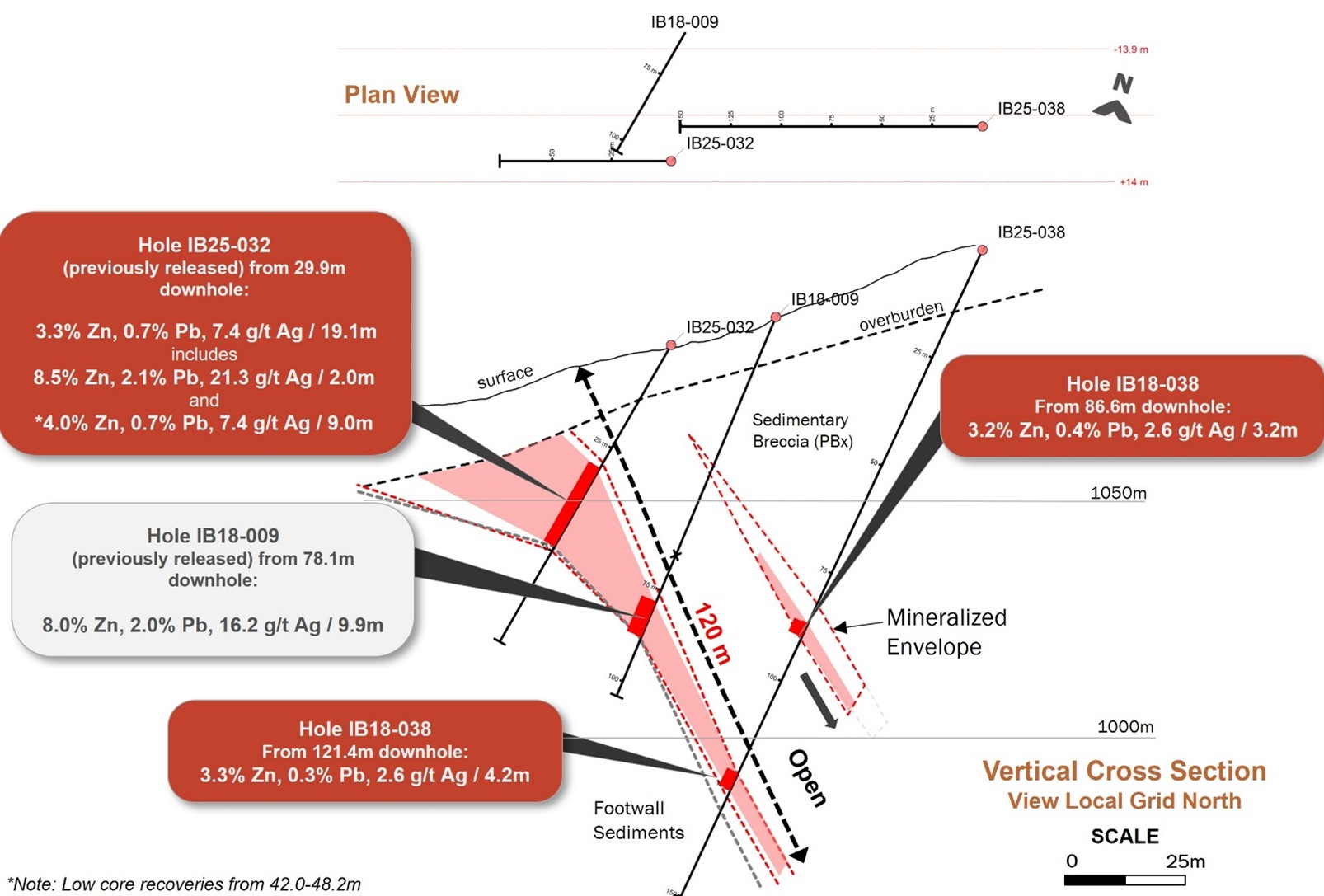
The B-9 Zone near surface mineralized trend (zinc-lead-silver-gallium) was extended to >1000 m strike length in the two-phased 2025 drill program and remains open.
Summary of 2025 Drill Highlights:
- Drill Hole IB25-043, a 300 m step-out hole, intersected highest grade intersection to date – includes 20.1% Zn, 1.7% Pb, 9.5 g/t Ag over 3.2 m from 197.6 m downhole in Phase2
- Trend expanded to >1000 m strike length – open for expansion in Phase 2
- Compares to strike lengths of major western Canadian Sedex (Zn-Pb-Ag) deposits
- Near surface, high-grades intersected
- Continuity of mineralization from near surface to 120 m depth in Phase 1
- Increased widths intersected directly below surface in Phase1
- Second, shallower mineralized horizon (“radiolarian” replacement) identified in Phase 1
- Gallium identified in sulphides
2025 Summary of Drilling - Highlights – Vertical Long Section

2025 Phase 1 Drilling – Cross Section A to B - B-9 Zone Extension to 120 m Down-dip and Open
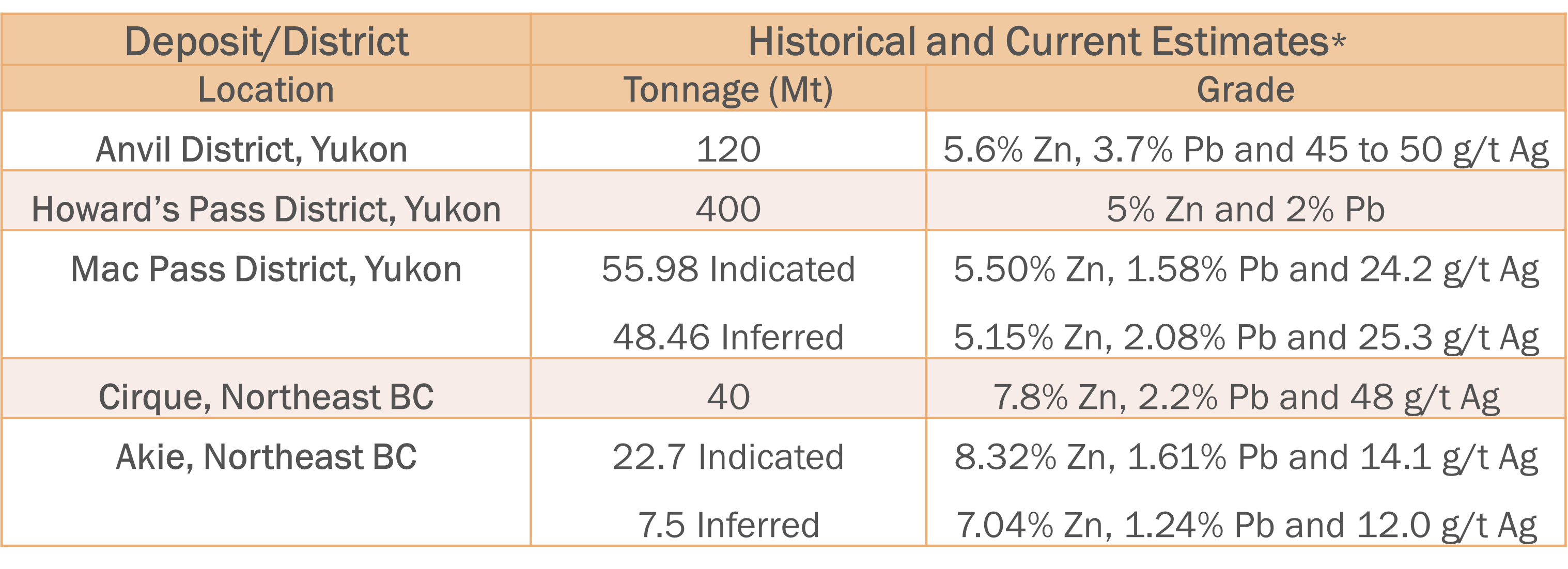
Examples of Giant Sedex Discoveries in the Yukon and Northern BC
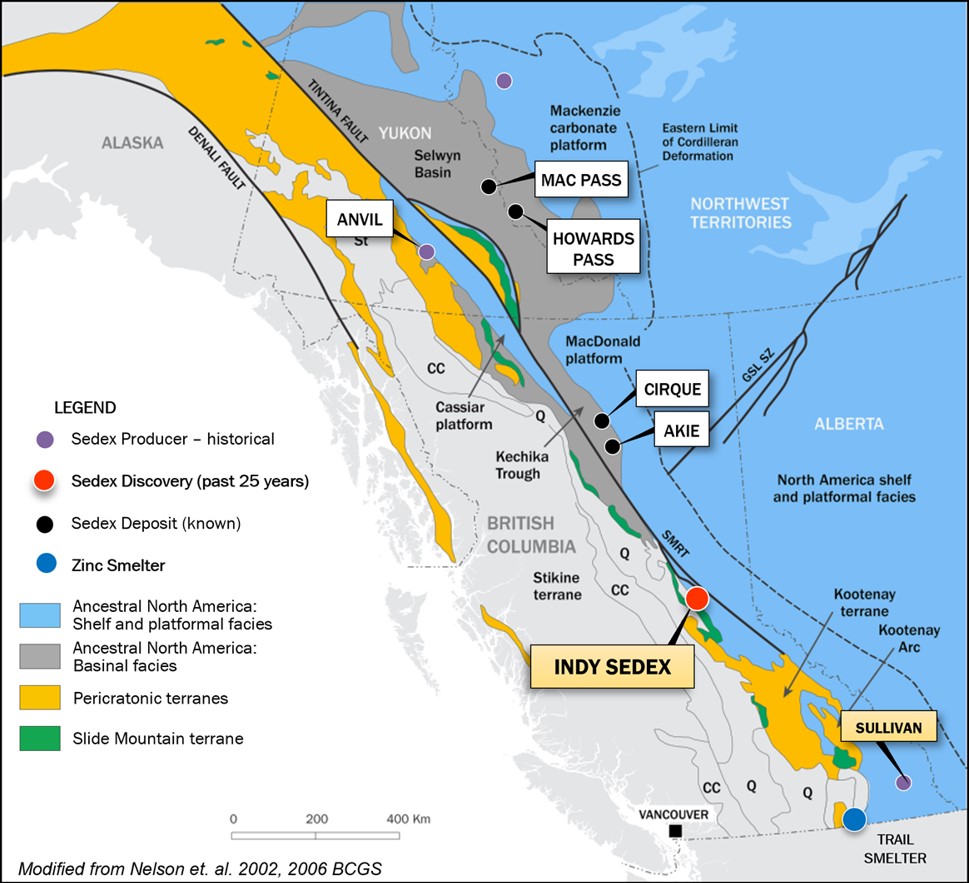
Vast Mineral Potential of the North is Discovered at Indy in Central BC
The age, strata and mineralization common in the giant deposits of the Selwyn Basin in the Yukon and northern BC have been identified at Indy, 500 km south of the previously identified Selwyn trend (Cirque and Akie deposits). Roads, highways, railway and power in central BC support low cost exploration and potential development costs.
Easy Access – Excellent Infrastructure
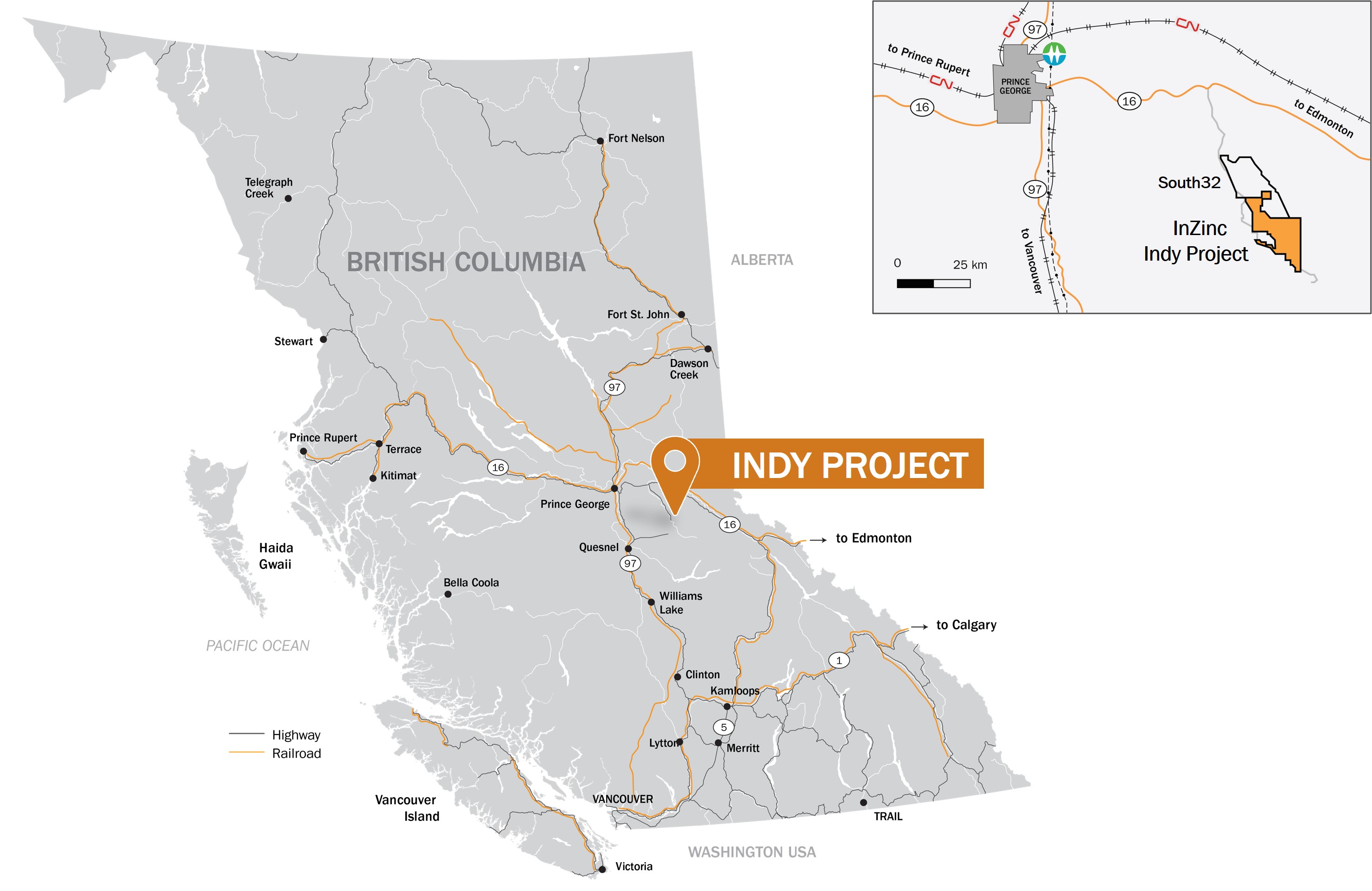
The project is located 90 km southeast of the city of Prince George, the major hub for transportation and heavy industry in central British Columbia. Indy is about a 1.5-hour drive from Prince George.
The project is accessed via 70 km of forestry road from the Yellowhead Highway (Hwy 16). It is located 85 km from the intercontinental Canadian National Railway (CNR), servicing the Port of Prince Rupert and connecting to the Port of Vancouver, and 35 km from hydro-electric transmission lines. A zinc smelter is located approximately 500 km to the south in the city of Trail, BC.
District Scale Tenure – A Major Presence
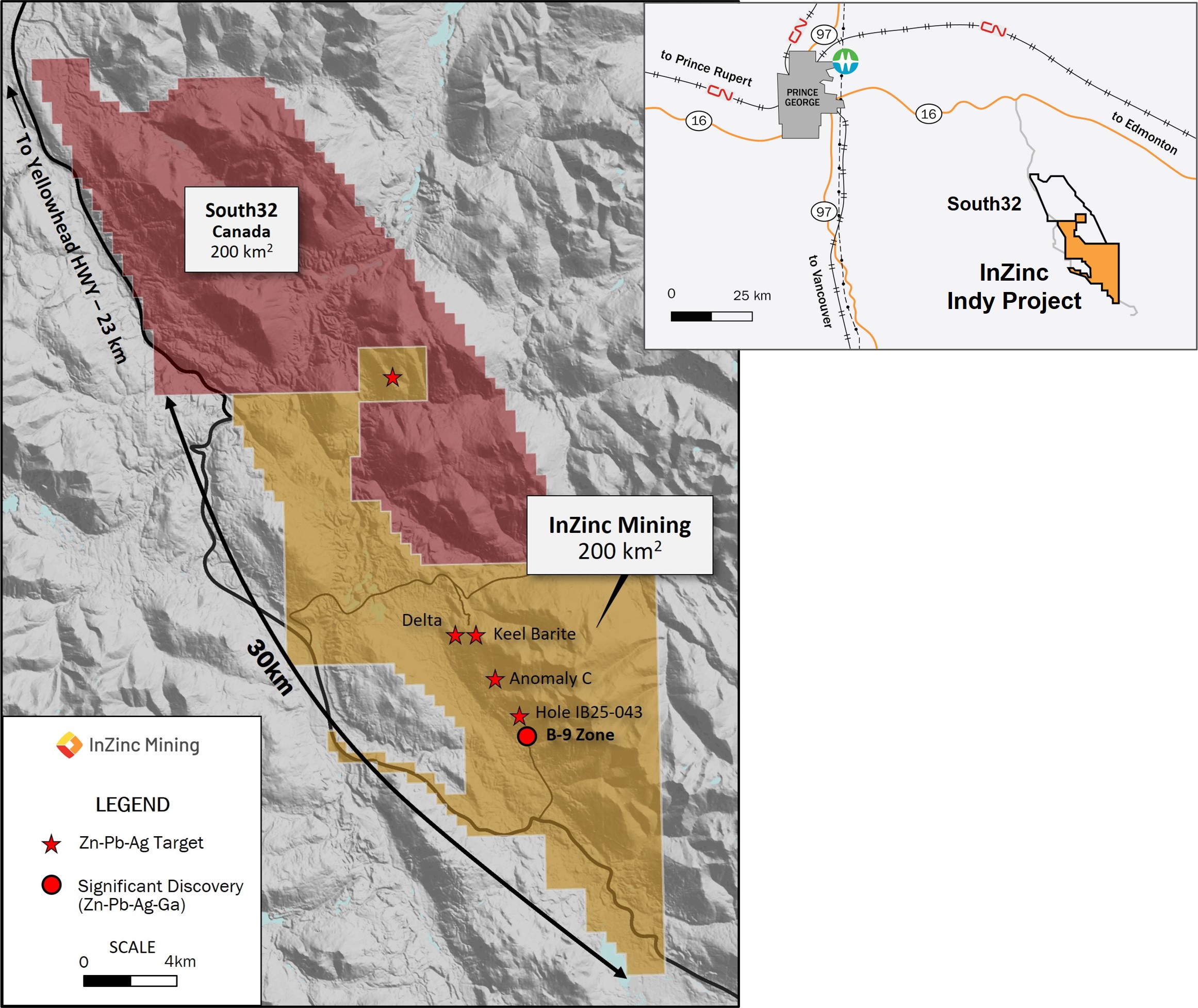
The InZinc mineral claims extend over a continuous 30 km (200 km2) trend comprised of extensive discoveries of mineralization and large unexplored targets in rocks with a known affinity for hosting large deposits.
South32 (ASX, LSE, JSE), a global mining and metal producer, independently staked 200 km2 of mineral claims northwest of Indy in late 2021.
Outstanding Potential for Expansion of B-9 Zone
Large Exploration Targets Remain Untested
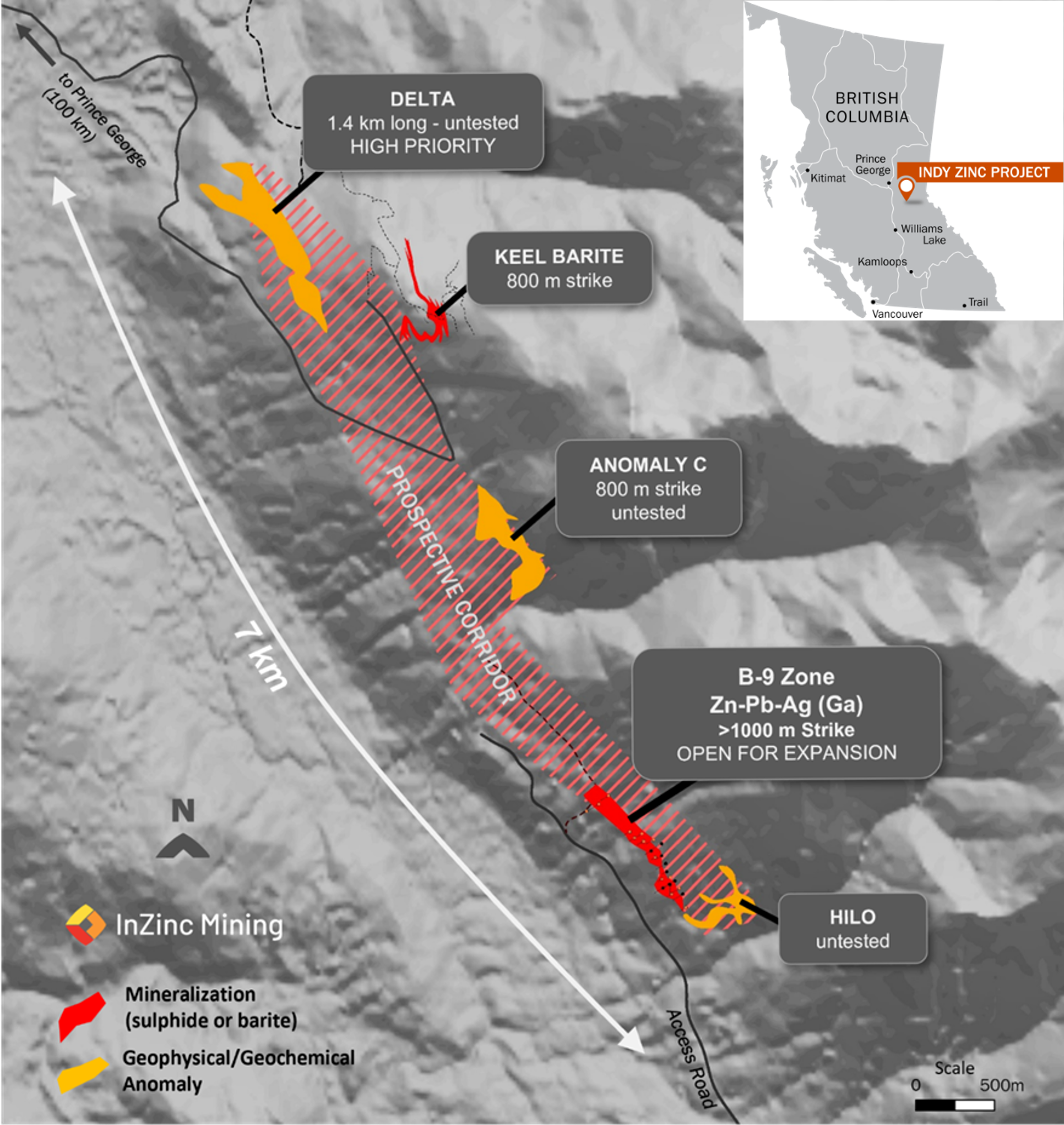
Exploration programs have discovered extensive mineralized trends, including Sedex type (zinc-lead-silver) mineralization and barite horizons. Additional large targets outlined along the 7 km Prospective Corridor remain untested by drilling. Exploration continues to refine targets in the Prospective Corridor and expand outwards across the remaining 23 km of the unexplored property.
B-9 Zone: The strike length of the near surface, drill defined B-9 Zone mineralization (Zn-Pb-Ag-Ga) has been extended to >1000 m. The strike length is similar in trend direction and length to the major western Canadian Sedex Zn-Pb-Ag deposits. The B-9 Zone remains open for expansion both along strike and at depth.
Keel Barite: Extensive barite mineralization (800 m trend) has been discovered by drilling at Keel, with local enrichment of zinc-lead at Keel West. Barite mineralization is present in many, if not all, of the large Sedex deposits in North America – especially at the deposits of the Selwyn basin. The location and distribution of barite provide high potential exploration vectors for potential large Sedex (zinc-lead-silver) deposits.
Delta: Widespread barite mineralization (up to 25% barite in rock samples), with local zinc-lead enrichment, occurs over the unexplored soil geochemical anomaly at the Delta target (1400 m trend), located 1 km northwest of Keel.
Prospective Corridor Mineralization and Targets